You have no items in your shopping cart.

Filter by price
Recently viewed products

KEIFEI
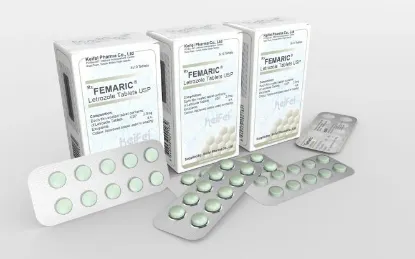
Keifei Femara
The reason it is only used in women of such an age is due to its powerful estrogen blocking ability which would have serious health implications for pre-menopausal women, but for male steroid users it is this trait that makes AIs like Letrozole (Femara) so appealing as we aim to combat the adverse effects of estrogen when using aromatizing steroids. Letrozole can lower your overall estrogen levels because it blocks the aromatase enzyme. This contrasts with the other popular category of estrogen control drugs for steroids users, SERMs, which only target very specific areas of the body. This allows Letrozole to combat a wider range of estrogenic side effects caused by steroids, with the two main ones being gynecomastia and water retention. This will also help prevent the high blood pressure that can come along when excess water retention is not addressed. Dosage Instructions 1.25mg-2.5mg /day Even at very low doses Letrozole is a potent drug so you do not require a lot of it to benefit from its full effects. Unlike with many of the other AIs or SERMs you might use as a steroid user where doses are normally higher than those used for medical treatment, with Letrozole we can get away with using a similar dose or even lower than is administered when the drug is used medically. Letrozole Dosage During Anabolic Steroid Use Making the mistake of taking too much Letrozole during steroid use will have no benefit and bring about negative effects, like fatigue. So, it’s critical to maintain a sensible dose. With a medical dose usually around 2.5mg daily, we would look at no higher than that and most of the time even lower. To protect from estrogen related side effects during steroid use a dose of as low as 0.5mg to 1.25mg every two days is often enough for excellent estrogenic related protection for most men. Only if you are experiencing early signs of gynecomastia would increasing the dose at this time up to 2.5mg per day can potentially even fully reverse the symptoms; but be prepared for a noticeable zap in energy during this time. Once gyno symptoms subside it’s important to reduce your Letrozole dose back down to regular estrogenic protection levels. Female Letrozole Dosage Increased estrogen levels are not anywhere near as great a concern for female steroid users as it is for males. The main reason for using an AI like Letrozole by females would be to mitigate water retention, especially for competitive bodybuilders or physique athletes where this is most important. In fact, Letrozole is not recommended as a first choice for females due to its potency in reducing estrogen so much, hence why it is not used medically by females who have not gone through menopause. Females who are determined to use this AI are advised to dose at just 0.5mg every other day and gauge results and effects from there. Letrozole Dosage for Increased Endogenous Testosterone Secretion and PCT This AI may have some ability to raise testosterone levels mainly through its ability to reduce estrogen. Both luteinizing hormone and follicle stimulating hormone have shown to be able to be increased by Letrozole and these are essential to the production of testosterone. So, while a reduction of estrogen is important for bringing about a rise in testosterone levels, this is a fine balance in men and reducing estrogen too low can actually have the opposite effect with testosterone not able to increase to a normal level if estrogen is suppressed too powerfully, which Letrozole has the ability to do. For this reason, many will choose not to make use of this drug during post cycle therapy at all, in favor of using a SERM like Nolvadex. However, if you find that Letrozole is preferable for you for post cycle therapy use, a low dose similar or lower to that stated above for during your steroid cycle is the only way to reduce the risk of very low estrogen occurring. Making use of Letrozole alongside Nolvadex, which is a staple in PCT for most men, results in both drugs making the other less effective. Combining these drugs is not recommended for PCT and therefore most people will opt simply to use the better PCT option in the SERM Nolvadex while enjoying the benefits that Letrozole can provide during the steroid cycle only.
R410,00
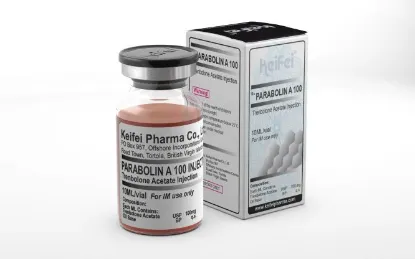
Keifei Tren A 100
Presentation: 10ml multi dose clear vial with Keifei® wording imprinted on the side. 10ml x Trenbolone Acetate 100mg/ml. Sealed with black flip off cap imprinted with keifei® wording. Each vial comes with 1 sets of 10 digits authentication codes. 10 vials/ box in a white and black colour outer box. 1ml single dose ampoule x Trenbolone Acetate 100mg/ml. Each ampoule imprinted with 3 rings on top blue, black, blue with a blue dot below. All wording is imprinted. Pack in 3 ampoules or 10 ampoules of 5 ampoules per tray x 2 in plastics insert with Keifei® imprint on it. The outer box contains 60 ampoules of 20 inner boxes of 3 Ampoules in white and black box. Each inner box pack of 3 ampoules come with 1 set of 10 digits authentication codes paste on each inner box. Or the outer box contains 100 ampoules of 10 inner boxes of 10amps in white and black box. Each inner box pack of 10 ampoules come with 1 set of 10 digits authentication codes paste on each inner box. * Remarks: NEW PACKING WITH IMPROVE QUALITY AND QC CHECK UNDER USP STANDARD, KNOW AS KEIFEI® PHARMA. Parabolin – A100 Parabolin A100 is a fast-acting trenbolone injectable steroid with a great effect on protein metabolism. Trenbolone is one of the best effective anabolic compounds, promoting protein synthesis, as well as creating a positive nitrogen balance. It is an appetite stimulant and improves the conversion of proteins. In laboratory tests, it has been demonstrated that trenbolone increases protein and decreases fat deposition. It has proven to be an excellent product for promoting size and strength in the presence of adequate protein and calories, promotes body tissue building processes, and can reverse catabolism.
R750,00
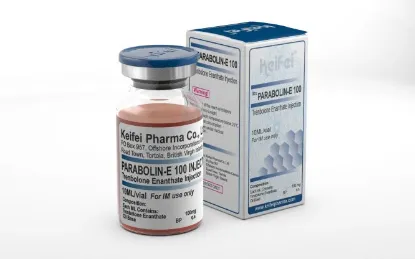
Keifei Tren E 100
Presentation : 10ml Multidoses clear vial with keifei® wording imprinted on the left. 10ml x 100mg Trenbolone Enanthate. Sealed with dark purple flip off cap imprinted with keifei®. Each vial come with 1 set of 10digits Authentication codes. 10 vials/ box in a white and dark purple colour outer box. * Remarks: NEW PACKING WITH IMPROVE QUALITY AND QC CHECK UNDER USP STANDARD, KNOW AS KEIFEI® PHARMA. Parabolin – E100 This trenbolone enanthate ester is create to replace the hexahydrobenzylcarbonate ester. Trenbolone Enanthate is both unique and incredibly obvious at the same time. On the other hand, attaching an enanthate ester o trenbolone seem like a simple idea at best. After all, we are all familiar with testosterone and methenolone enanthate. This is much lower releasing drug, and offers a great alternative to frequent injections of trenbolone acetate. The base of trenbolone is well understood that it is non aromatizable compound, estrogenic side effects are not expected.
R750,00
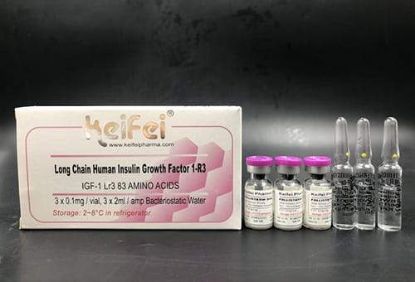
Keifei IGF 1
GF1 LR3 allows for many of the growth-promoting effects of growth hormone insulin-like growth factors also know as IGF’s. IGF-1 LR3 comprises a family of peptides (protiens) that play important roles in mammalian growth and development. IGF1 LR3 is also known as Long R3 IGF-1 or Insulin-Like Growth Factor-I Long Arg3. The Long R3 IGF-1 version is significantly more potent than regular IGF-1. The enhanced potency is due to the decreased binding of IGF1 LR3 to all known IGF binding proteins. These binding proteins normally inhibit the biological actions of IGF’s therefore IG-1 LR3 has been shown to have increased efficacy and function . This IGF-1 LR3 analog of IGF-1 has been created with the purpose of increasing the biological activity of the IGF peptide. IGF1 LR3 is also known as Long R3 IGF-1 or Insulin-Like Growth Factor-I Long Arg3. This is a human recombinant, single, non-glycosylated, polypeptide chain containing 83 amino acids and having a molecular mass of 9200 Daltons. IGF1 mediates many of the growth-promoting effects of growth hormone (GH; MIM 139250). The LR3 is a long-term analog of human IGF-1, specifically designed and manufactured for mammalian cell culture to support large-scale manufacturing of recombinant biopharmaceuticals. Early studies showed that growth hormone did not directly stimulate the incorporation of sulfate into cartilage, but rather acted through a serum factor, termed ‘sulfation factor,’ which later became known as ‘somatomedin’. IGF-1 LR3 is the primary protein involved in responses of cells to growth hormone (GH): that is, IGF-I is produced in response to GH and then induces cellular activities. One such example is muscle growth or hyperplasia. This compound also makes the human body more sensitive to insulin. It is the most potent growth factor found in the human body. IGF-1 causes muscle cell hyperplasia, which is an actual splitting and forming of new muscle cells. The most effective form of IGF-1 is considered to be IGF-1 LR3. This formula has been chemically altered to avoid binding to proteins in the human body, and to increase the half life, approximately 20-30 hours. IGF-1 is naturally produced in the liver as a result of GH (Growth Hormone) metabolism in the presence of insulin. Muscle tissue can also produce IGF-1 by way of an intracellular response. In fact, one of the benefits of training sets that result in an intense burn, or stretch position training, is the production of natural IGF-1. It is also a side effect of oral 17-ALFA ALKYLATED STEROIDS, which cause a higher release of IGF-1 from the liver. IGF-1 receptors exist throughout muscles and organs such as the heart, spleen, small intestines, and kidneys with a higher concentration of receptors exerting effects upon organs. IGF-1 is extremely anabolic, far more so than GH or Insulin. Recombinant IGF-1 (genetically engineered) was reported to be effective when injected intramuscularly because it causes localized growth. This was the most popular method, and the agreed wisest for the most part. The drug has a half-life of about 10 minutes, and if it is or has been bound to IGF -BP-3, (INSULIN GROWTH FACTOR BINDING PROTEIN) the half- life is extended to about 12 hours. Pro’s often stacked Insulin and/or GH with IGF-1 because IGF-1 shuts off natural GH production and GH causes Insulin resistance. IGF-1 is often referred to as Pro-insulin because it counteracts Insulin resistance and interacts with insulin. But this would actually be an untrue term for IGF-1. IGF-1 can have all the side effect of GH or insulin use with an added negative: gastrointestinal (GI) growth. This is due to a higher number of IGF-1 receptors being located in the GI tract as compared to skeletal muscle. The latter has more GH receptors. This explains much of the bloat seen in pro bodybuilders of late. IGF-1 is not stable in synthetic forms. A loud noise, shaking a vial, and sudden heat changes can render it nothing more than a bunch of expensive amino acids. Picture a piece of string folded up in a specific shape and held in that shape by a few fibers. This is what an amino acid sequence for GH or IGF-1 looks like, but the IGF-1 sequence has only 2 fibers keeping the active shape. The strand or string is a specific amino acid sequence. The shaping fibers holding the active shape are called disulfide bridges. Change the folding or break a bridge and the IGF-1 no longer fits into its receptor-site. Like a key must have a specific shape to actuate its lock, so must a drug have the right shape to actuate its receptor. Again, this explains the common noted necessity of careful preparation and site-specific injection (into the muscle group trained that day) when IGF-1 was administered. Common stacks have been 0.25-0.50-mg of GH per KG of body weight stacked with 60-1000mcg of IGF-1 divided into 2-5 daily injections. Many had reported improved lean mass gains by combining both with insulin and high androgen AAS (Such as testosterone or orals such as DIANABOL and /or ANADROL-50) for 4-8 weeks. Many simply injected 40-mcg of IGF-1 directly into the muscle group trained that day after training. It is important to note that IGF-1 can cause hypoglycemia and blood sugar monitoring was considered paramount by most. *The reader should note that IGF-1 has been used clinically on children at dosages of over 3-7mg daily. That is 3,000-7,000 mcg a day! No negative side effects were recorded, though none were expected… of course. The point being is that the 40-100 mcg of IGF-1 used by athletes is most likely insufficient, yet very expensive. However, the results some individuals have realized through IGF-1 use are amazing. I have personally noted amazing new growth as a result of past IGF-1 administration. However it is important that readers realize that long term negative side effects have not been well studied. Anything that possesses genetic altering potential has equally negative potential as well. Insulin-like growth factor (IGF-1: originally called somatomedin) has been known to be produced by live under the influence of human growth hormone (HGH). The mature systemic type of IGF-1 is a simple 70 amino acid peptide, but its gene is unexpectedly large spanning a region of over 90 kb of genomic DNA. Alternative splicing of IGF-1 gene results in different transcripts encoding several IGF-1 precursor proteins. IGF-1 has been shown to be involved in several cellular processes including tissue differentiation,maintenance of tissue mass and tissue repair . And it is known to be mitogenic and myogenic. IGF-1 is thought to be responsible for much of the anabolic activity of HGH, including nitrogen retention and protein synthesis as well as causing muscle cell hyperplasia (increase in number of muscle cells), and mitogenesis (the growth of new muscle fibers). In fact, IGF-1 acts on several different tissues (not just muscle) to enhance growth through various mechanisms. The easiest way to think about IGF is that it is a primary factor in the anabolic effects of weight training. IGF-1 Long R3 Many IGF-1 variations have been developed for research and bodybuilding use. IGF-1 Long R3 (or Long R3 IGF-1) is the most effective form of IGF-1. it has been chemically altered and has had amino acid changes which cause it to avoid binding to proteins in the human body and allow it to have a much longer half life, around 20-30 hours. Long R3 IGF-1 is an 83 amino acid analog of IGF-1 comprising the complete human IGF-1 sequence with the substition of an Arg(R) for the Glu(E) at position three, hence R3, and a 13 amino acid extension peptide at the N terminus. This analog of IGF-1 has been produced with the purpose of increasing the biological activity of the IGF peptide. All these alterations make IGF-1 Long R3 significantly more potent (2-3x) than IGF-1 in studies, because it has a lower affinity to be rendered inactive by IGF binding proteins. Yeah, all effects of IGF-1 still holds true for this version, but it?s just a bit more active in the body, and hence more potent. It is also not as expensive since a media grade version is available which is sufficient for bodybuilding use. Effects Experiments have been carried out using the cDNA of IGF-1(a compound which was responsible for directing over expression of IGF-1) in an adenoviral vector under the control of a muscle regulatory sequence. Results were shown by Fig.1. It was found that a single intramuscular injection of IGF-1 cDNA into a mouse muscle resulted in a 15% increase in mean muscle fibre cross section area and a 14% increase in strength in young adult mice within four months. It was concluded due to the anabolic effect of IGF-1. But those effects are not all that the researchers have found. IGF also seems to prevent aging-related muscle changes in old adult mice. These old mice experienced a 27% increase in strength as compared with uninjected old muscles. Muscle mass and fiber type distributions were maintained at levels similar to those in young adults. The researchers have speculated that these effects are primarily due to stimulation of muscle regeneration via the activation of satellite cells by IGF-I But how effective does IGF-1 Long R3 work on bodybuilders? It’s difficult to put a number on results, since they’re so subjective, but as a general rule, experienced users have found IGF-1 Long R3 to add up to 5% to their lifts in a cycle alone, and a decent reduction in body fat coupled with an increase in muscle gain. A five to ten pound sway each way is possible. The less experienced you are with chemical enhancement, typically the greater the results you can achieve with IGF-1 Long R3 (or any body enhancement chemical). In addition, users report a steady decrease in bodyfat percentage levels due to increase in muscle tissue. Users and researchers have reported most effective results with a 6 weeks on and 4 weeks off cycle. Mechanism How does IGF-1 work? To understand how IGF-1 works we have to understand how muscles grow. The ability of muscle tissue to constantly regenerate in response to activity makes it unique. It’s ability to respond to physical/mechanical stimuli depends greatly on satellite cells. Satellite cells are muscle precursor cells which also might be thought of as “pro-muscle” cells. They are cells that reside on and around muscle cells. These cells sit dormant until called upon by growth factors such as IGF-1. Once this happens these cells divide and genetically change into cells that have nuclei identical to those of muscle cells. These new satellite cells with muscle nuclei are critical if not mandatory to muscle growth. Whenever a muscle grows in response to functional overload there is a positive correlation between the increase in the number of myonuclei and the increase in fiber cross sectional area (CSA). When satellite cells are prohibited from donating new nuclei, overloaded muscle will not grow [10, 11]. So one important key to unnatural muscle growth is the activation of satellite cells by growth factors such as IGF-1. IGF-1 stimulates both proliferation (an increase in cell number) and differentiation (a conversion to muscle specific nuclei) in an autocrine-paracrine manner, although it induces differentiation to a much greater degree. This is in agreement with the Dual Effector theory. In fact, you can inject a muscle with IGF-1 and it will grow. Studies have shown that , when injected locally, IGF-1 increases satellite cell activity, muscle DNA content, muscle protein content, muscle weight and muscle cross sectional area. Scientists are now discovering the signaling pathway by which mechanical stimulation and IGF-1 activity leads to all of the above changes in satellite cells, muscle DNA content, muscle protein content, muscle weight and muscle cross sectional area just outlined above. This research is stemming from studies done to explain cardiac hypertrophy. It involves a muscle enzyme called calcineurin which is a phosphatase enzyme activated by high intracellular calcium ion concentrations. Note that overloaded muscle is characterized by chronically elevated intracellular calcium ion concentrations. Other recent research has demonstrated that IGF-1 increases intracellular calcium ion concentrations leading to the activation of the signaling pathway, and subsequent muscle fiber hypertrophy . In summary the researchers involved in these studies have explained it this way, IGF-1 as well as activated calcineurin, induces expression of the transcription factor GATA-2, which accumulates in a subset of myocyte nuclei, where it associates with calcineurin and a specific dephosphorylated isoform of the transcription factor nuclear factor of activated T cells or NF-ATc1. Thus, IGF-1 induces calcineurin-mediated signaling and activation of GATA-2, a marker of skeletal muscle hypertrophy, which cooperates with selected NF-ATc isoforms to activate gene expression programs leading to increased contractile protein synthesis and muscle hypertrophy. Dosage and Administration The magic effects happens between 60mcgs and 120mcgs per day, in divided doses. In general, people who have used less, and even up to 50mcg/day have had mediocre results. People who have used more have suffered headaches and nausea, and generally not much more in the way of results. It has been clearly observed in studies that when GH and IGF-1 are used together, you’ll get greater results in the accumulation of Lean Body Mass than you would by using either of them alone[15]. In addition, there is a very strong probability that testosterone would be synergistic to GH[16], and would also increase IGF levels in muscle. Differences between IGF-1 and HGH HGH is actually closely related to IGF-1, in a lot of ways. HGH, or GH in short, is certainly an effective fat burner and anabolic agent, and is a protein secreted by the pituitary. Once secreted, it has the ability to influence various cells in the body to increase in number and size, as well as having the ability to enhance the movement of amino acids through cell membranes- thereby increasing the rate at which the cells can convert those molecules to usable proteins. It also causes cells to preferentially burn fat in lieu of carbohydrates. The important thing to realize is that there is a mounting body of evidence that strongly suggests that these effects occur as a result of the IGF-1 released as a result of the pituitaries GH secretion. Scientists have discovered that many of HGH’s anabolic and regenerative effects are actually mediated by IGF-1. HGH indirectly causes muscle growth by stimulating the release of IGF-1 when it (the HGH) is destroyed in the human body. So one way you could look at it as HGH being a precursor to IGF-1. The later is more effective at directly causing muscle growth and density increases than HGH. Over the past few decades, HGH has developed quite a reputation for taking awhile (often several weeks) for the user to start seeing results. In contrast, IGF-1 often begins to product noticeable results within the first couple of weeks. With growth hormone you need to use high amounts of anabolics and often insulin to see any gains at all, this is not the case with IGF-1. IGF-1’s superiority to HGH is not only intuitive at some level, but has also been clearly elucidated clinically as well. In the following graphs taken from a rodent study comparing IGF-1 and HGH, a low dose as well as a high dose of IGF-1 was shown to be more anabolic than HGH. In comparison to HGH, IGF-1 produced an overall greater total protein content within the injected muscle as well as a greater final weight of the that muscle (called the “Tibialis Anterior” or TA) It seems to be the case that IGF-1 would be superior to HGH as an anabolic agent. In some clinical studies, that is not always the case, but in most of bodybuilders and athletes, greater results are often seen with IGF-1 over HGH – and it should be noted that they are often seen more quickly.
R800,00
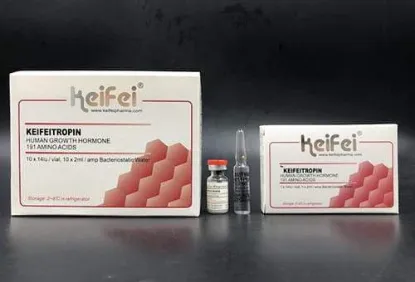
Keifei Growth Hormone Kit 160 iu
Human Growth Hormone (GH) has been a subject of debate since I was a kid. Natural (endogenous) GH is produced by the pituitary gland. Children produce 2 i.u. “spurts” 4-7 times per day for 4-5 non-consecutive days during a 2-3 week period (during growth spurts). That would equal 32-70 i.u. in only a 4-5 day span. A healthy adult’s pituitary releases only 0.5-1.5 i.u. daily. Until the mid 1980’s, the only available form of exogenous (occurring outside the body) GH was manufactured by taking the pituitary glands of dead corpses (like there are a lot of “live” corpses running around?) and grinding them up. (I am not joking!). The GH was then extracted and purified through a series of expensive procedures, packed and sold by prescription only for use by children suffering from stunted growth. About 1987, this form of GH was linked to a fatal brain disease called CREUTZFELD-JAKOB DISEASE, and removed from the market. Enter Genetech and synthetic GH. The first synthetic GH was produced by genetically altering transformed mouse cells /Ecoli. Natural GH has a 191 amino acid sequence where as the Protropin brand of GH produced by Genetech contains 192 amino acids in its sequence. This may have the affect of causing the body to produce GH antibodies which deactivate the GH. Most synthetics now contain the normal 191 amino acid sequence, of which there are over a dozen available today. GH has 3 effects any athlete desires: GH helps the body burn more adipose (fat) tissue by promoting the release of fatty acids to be used as energy. Normally at rest, the body uses about an equal division of fat and carbohydrate calories. When the endocrine system senses a low circulatory level of glucose, the hypothalamus-pituitary-axis (HPA) reacts by releasing GH. The GH then triggers (through a series of enzymic/chemical reactions) the release of fatty acids from adipose stores so metabolic energy requirements can be met. This means exogenous GH administration has been well documented to do the same. GH has a very potent anabolic (protein synthesis/tissue building) effect. In exerting anabolic effects, it can cause both hyperplasia (an increase in the number of muscle cells) and muscular hypertrophy (the enlargement of muscle cells). This change in cell number is permanent and therefore means more cells to make bigger. GH also has an anabolic effect on soft tissues such as tendons, cartilage, and other connective tissue. This means old injuries repair and strength increases due to stronger connective tissue… both at an accelerated rate. It is a well known fact that GH is a powerful anti-catabolic agent (protein sparing). This effect has allowed modern bodybuilders to retain or even add significant lean mass tissue during calorie restricted periods (cutting phases) and become the shredded monsters of the new era. When using GH many athletes were less than satisfied with their results. Most likely this was because they bought bogus GH. It was common to find GH for a hard-core pro bodybuilder cost about $35,000 or more, yearly. To test GH, most simply bought a pregnancy test kit, mix a vial of (hopefully) GH and place a drop or two in the test area. If the test result was “pregnant”..they had been screwed. Most pregnancy test kits test for elevated gonadoltropins (which HCG is and GH is not). For those few, whose bodies manufactured GH anti-bodies (and GH failed to work for you) sorry about your luck. GH, used properly, has overwhelmingly been renowned as a genetic equalizer if used for that purpose. Any polled athlete chose to use GH as a performance enhancing drug should have first understand at least the basics of its actions. GH itself is not responsible for the majority of the effects seen from GH use. Actually GH is only a precursor to the so-called “good stuff”. When GH passes through the liver, it is converted into INSULIN-LIKE GROWTH FACTORS (such as IGF-1). IGF-1 is a very active but unstable chemical, which is why the body waits until the last second to make it naturally. The liver has a limited capacity to convert excess GH into IGF-1 unless other chemical hormone levels are also elevated. Insulin, T-4/T-3 thyroid hormones, gonadotropins, androgens/anabolic hormones, and even estrogen and corticosteroids all play an important role in the positive effects of GH. So they too were often exogenously elevated in what was considered “the correct ratios” by the largest of the self administering athletes. For the liver to convert high levels of GH to IGF-1 several times a day and cause a high quality anabolic response, it was commonly noted that T-3 thyroid hormone and insulin also needed be increased to accomplish the desired effect. Triacana may be strong enough to increase thyroid activity, but Cytomel was considered to be a better choice. Though some seemed to disagree, most emphatically believed that a fast-acting insulin such as HUMULIN-R or Humalog was a better and safer choice of exogenous insulin since they allowed better timing and have a much shorter effective period. This allowed the athletes to time insulin activity with the active period of GH at the optimum absorption times such as upon waking and the first few hours after a workout. The result was less chance of fat accumulation and a heightened anabolic response. Since GH suppresses natural T-3 thyroid hormone release, the exogenous administration of Triacana or Cytomel allowed for an elevated calorie intake that was utilized more for building muscle and soft tissue than for adipose tissue storage. Many pro bodybuilders used Clenbuterol and/or ephedrine stacks with GH while dieting. Since Clenbuterol and Ephedrine both suppress natural insulin release, they usually stacked the GH and Clenbuterol /Ephedrine with a synthetic T-3 thyroid hormone and sometimes with insulin as well. The use of insulin was dependent upon whether it was a bulking or dieting phase and depending on how their body responded to exogenous insulin use. *I can not stress enough how dangerous insulin use can be. Comas and death are quite possible if used wrong. If you wish to use it, please see a doctor for monitoring. AAS and/or Clenbuterol further enhance the anabolic effects of GH. From all but a few polled it was reported that excellent muscle mass gains resulted with the use of GH when other chosen hormone levels were also met (*also see “cycles”) and one could afford it. Also, beware of fake GH. It is more common than you may realize. It is an illegal drug and the black market is not always honest. The question of dosage was a big one. For the purpose of stunted growth manufacturers of GH (due to pituitary hyophysially caused stunted growth) state 0.3 i.u. weekly per LB of body weight. So for a 235 LB bodybuilder that would equal 70.5 i.u. weekly, meaning a daily total of about 10-i.u. However, even 2-3i.u. daily did produce some nice results over a 6-8 week period when the other reported hormone requirements were met as well. Short high dosage burst cycles too were noted to create these results (which will be discussed later) by the more elite of those polled. *GH is medically administered intramuscularly or subcutaneously (under the skin). *When multiple injections were utilized, I personally noted better results with subcutaneous administration. *1-mg=2.7 i.u. of GH and some products are listed as such. With exception of those few whose insert states otherwise, the dry unmixed GH substance maybe stored at room temperature. Once the solution has been mixed with the dry GH powder, (SWIRLED, DO NOT SHAKEN) the mixture must be refrigerated and lasts for 24-hours before it begins to degrade. An interesting product has become available called DEPO-NUTROPIN that has an active-life of about a month. This would allow for fewer injections and a reduced price. Also, several patents run out this year so many overseas and less expensive GH preparation will soon be available in the U.S. by prescription only. *Though no negative side effects were reported, the available literature does list several serious ones: Kidneys and heart enlargement, high blood pressure, diabetes, thyroid hormone deficiency, and acromegaly. For the most part, they are rare to say the least and usually would be from extreme dosages and lengths of cycles. But like most hormones, you just do not know until it is a fact for you. Kind of scary, huh? When GH was utilized with an insulin protocol, it was considered important to space injection periods between GH and insulin about an hour. Also if GH was utilized only twice daily, it was reported best to avoid natural high points of GH release such as first thing in the a.m., post-work out, and right before bed. This was if GH was utilized without insulin. Human Growth Hormone (somatotropin – also referred to as HGH, or HGH) is created by somatotropes in the pituitary gland of the human brain, the primary form consisting of a 191 amino acid chain. Somatotropes make up more than 50% of the pituitary gland and growth hormone is by far the most important hormone produced there. By the age of 60 most people will have approximately 80% less growth hormone in their system than when they were 20. When we are young, HGH is in big part responsible for the proper growth of bones, muscle, and other tissues. As we become adults, HGH is responsible for keeping muscles from wasting away, supports healthy immune system response, regulates aspects of our metabolic function dealing with increased fat metabolism and healthy body composition in later life, and maintains and repairs our skin and other tissues. HGH, or GH in short, is certainly an effective fat burner and anabolic agent, and is a protein secreted by the pituitary. Once secreted, it has the ability to influence various cells in the body to increase in number and size, as well as having the ability to enhance the movement of amino acids through cell membranes- thereby increasing the rate at which the cells can convert those molecules to usable proteins. It also causes cells to preferentially burn fat in lieu of carbohydrates. rHGH rHGH is a human growth hormone produced by recombinant DNA technology derived from engineering Escherichia coli (E. coli), and is identical to the natural growth hormone in amino acid sequence and three-dimension structure. It has a molecular with of 22,125 daltons of which 191 amno acid sequence and structure are identical to the dominant form of the human pituitary growth hormone. Effects HGH has two distinct types of effects: Direct effects are the result of growth hormone binding its receptor on target cells. Fat cells (adipocytes), for example, have growth hormone receptors, and growth hormone stimulates them to break down triglyceride and suppresses their ability to take up and accumulate circulating lipids. Indirect effects are mediated primarily by an insulin-like growth factor-1 (IGF-1), a hormone that is secreted from the liver and other tissues in response to growth hormone. A majority of the growth promoting effects of growth hormone is actually due to IGF-1 acting on its target cells.
R2 700,00
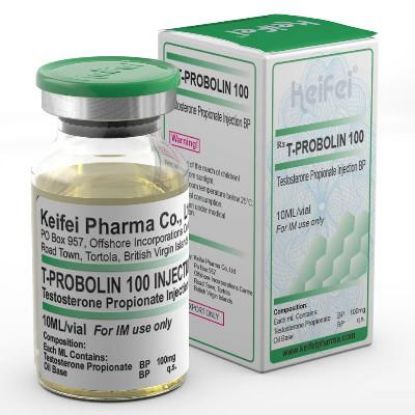
Keifei Test Prop 100
Due to Testosterone Propionate possessing a brief active-life of 2-3 days, many athletes involved in tested competitions liked the stuff…a lot. Testing is usually based upon testosterone /Epitestosterone levels. Though most individuals have a much lower ratio, athletes can have natural ratios of up to 6:1. This is considered a negative test for steroids. usually. By injecting Propionate up to 36 hours before competition, plasma Testosterone levels remained elevated while urine concentrations usually fell within the 6:1 levels.
R430,00